
Hello,
Every now and then I find myself writing something a little more personal than technical, and this is one of those posts.
For over twenty years I’ve worked with Business Intelligence and, for much of that time, Qlik. During that journey I’ve worked on everything from small departmental dashboards through to large enterprise implementations involving multiple developers, business stakeholders and production environments.
One thing has remained remarkably consistent.
Building the application is usually the easy part.
Getting it safely into production is often the challenge.
As projects grow, so do the moving parts. More developers. More business users. More testing. More approvals. More pressure to deliver. Before long, release management becomes a collection of spreadsheets, emails, Teams messages, Jira tickets and someone’s memory of what changed.
Everyone is trying to do the right thing, but there isn’t always a single place that brings the whole process together.
Over the last few months I’ve been asking myself a simple question:
“What would I build if I could start again?”
That question eventually became DevFulfilled.
Version 1.0 includes structured release cycles, approval workflows, GitHub integration and AI-powered peer review, all designed specifically with Qlik Sense development in mind.
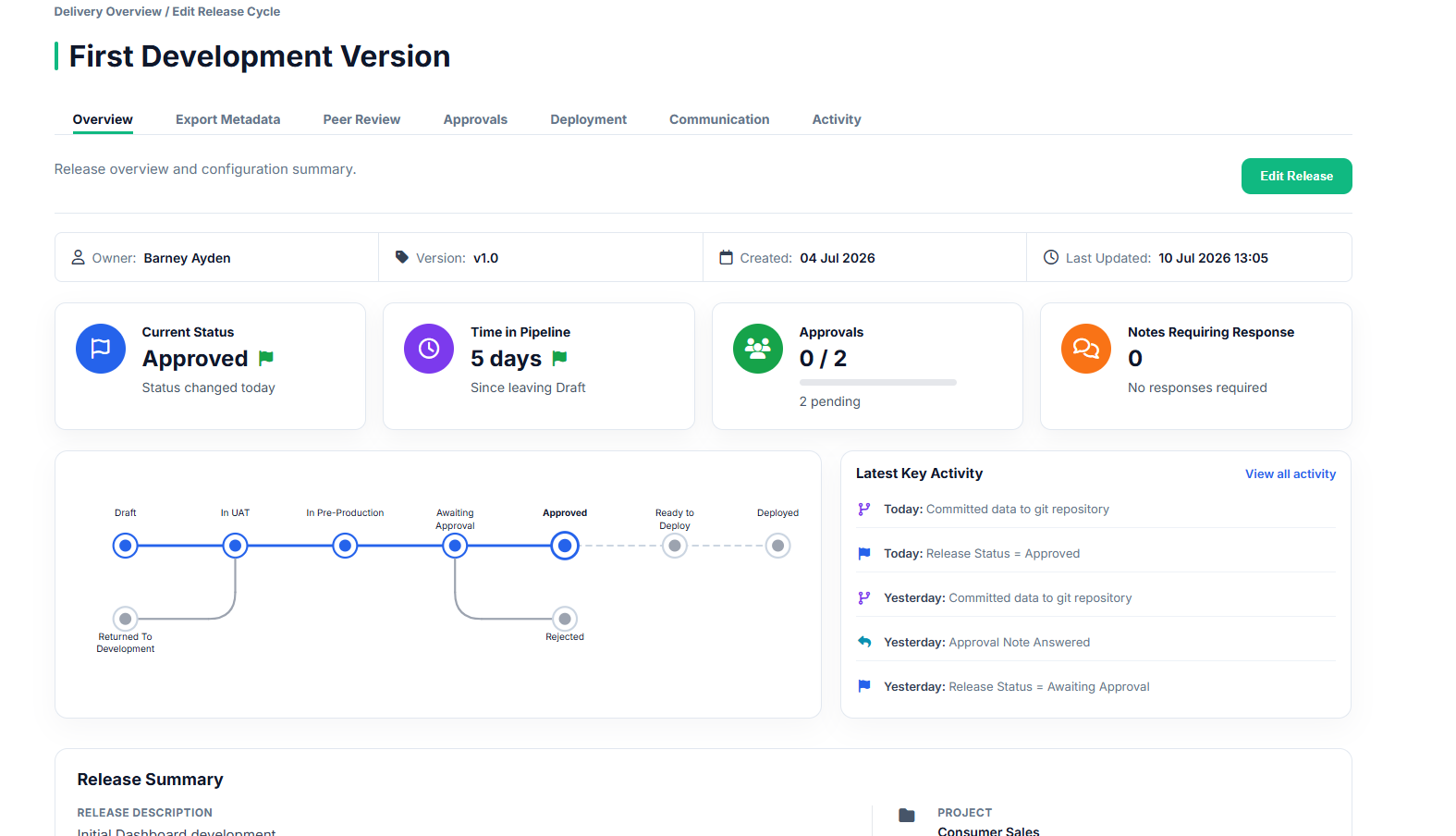
It’s designed to sit alongside Qlik Sense, GitHub, and toots such as Jira, helping development teams manage the journey from completed development to a successful deployment.
The AI review has probably been the most interesting feature to build. Rather than simply checking syntax, the aim is to review application metadata in the same way an experienced developer might during a peer review. It’s still early days, but I think there’s huge potential for AI to improve software quality without replacing the developer.

Like most projects, DevFulfilled isn’t “finished”. In many ways version 1.0 feels more like the beginning than the end. I already have a long list of ideas, improvements and features that I want to explore over the coming months.
As always, I’d really value your thoughts.
If release management is something your team has solved particularly well, I’d love to hear about it. Equally, if it’s still a manual process held together with spreadsheets and good intentions, I’d be interested to know what causes the biggest headaches.
You can find out more about DevFulfilled here:
Thanks for reading.
Richard

